Work
Things I’ve shipped
Work for clients, tools in real use in my day job, and the tools I run myself. Each write-up describes the problem, what was built, and the reasoning, including what was deliberately left out.
Client work
Done for clients, or delivered to business audiences.

Kitchen schemes from the architect's plan
Delivered · client site live (private link)Measure the room into numbers first; let the image model add only the finish.
A paid commission to show a private client their unbuilt kitchen in nine finished schemes across three viewpoints, day and evening, with a page where they change doors, worktops, floors, walls, taps, stools, sofa and lights themselves. Two days, 250 generated images, every one checked against the measured room.
- 250
- images generated, each checked
- 9 × 3
- schemes × viewpoints, day and evening
- 46
- fixed choices on the try-it page
AI training presentation
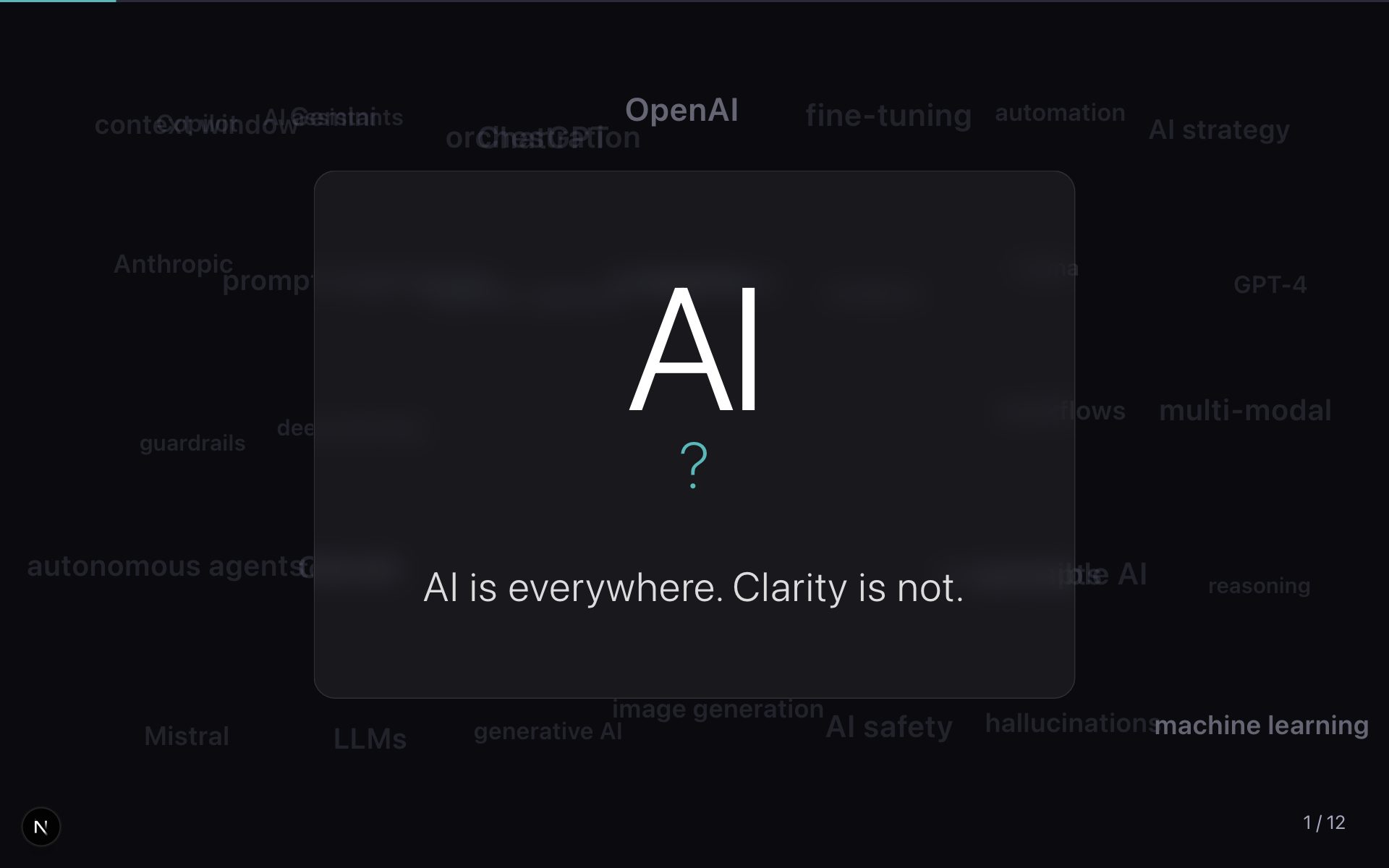
Delivered live · several business audiencesA presentation about AI that proves the point by running real AI live, in the room.
A browser-based interactive presentation for non-technical business audiences, with working AI demos embedded in the slides. The engineering that matters is invisible: every live demo has a silent fallback, so a flaky network never becomes a failure in front of a room.
Running the chain on a real engagement
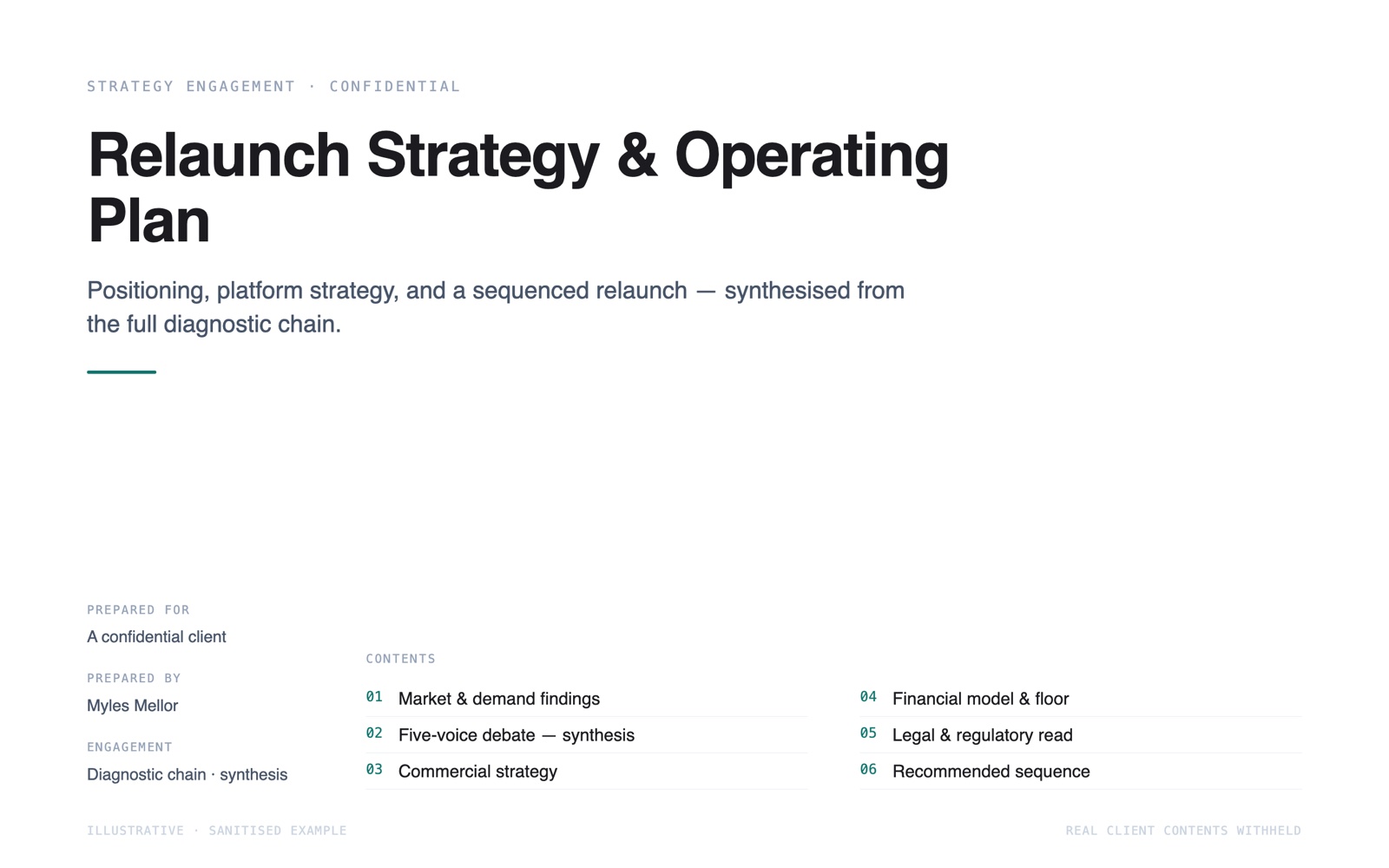
External engagement · anonymisedThe diagnostic pipeline, used end-to-end on a live external piece of work — not a demo.
I ran the full diagnostic chain for a solo founder repositioning a direct-to-audience personal brand: intake, cited research, a five-voice debate, three specialist reviews, and a strategy synthesis they could act on. Anonymised by design — what's shown is the shape of the work and the judgement behind it, never the contents.
- 5
- voices in the debate
- 3
- specialist reviews
- 0
- client details shown
Linen calculator
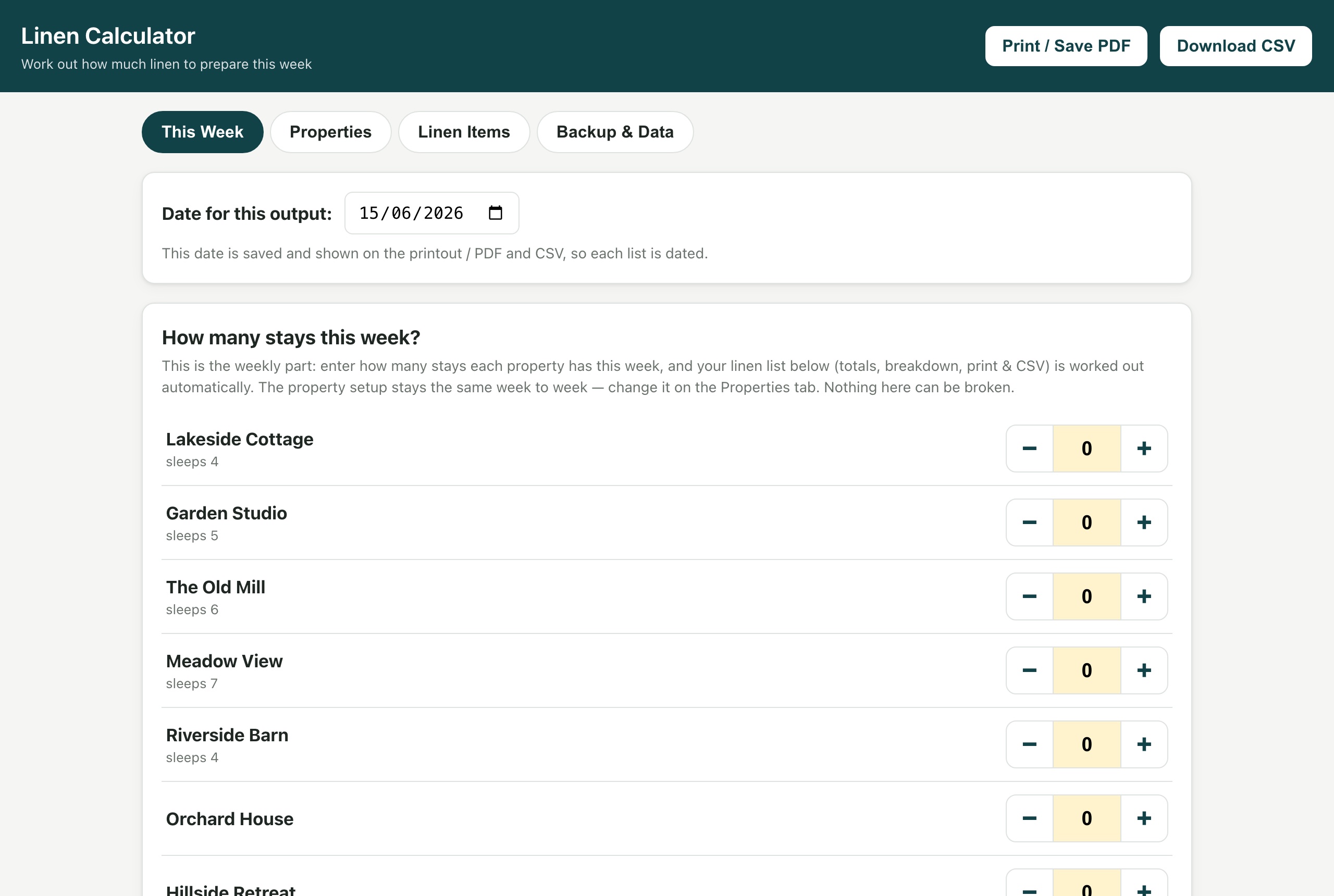
Delivered · commercial pieceA fragile spreadsheet turned into a dependable, can't-break tool — built fast, hardened for real use.
A small commercial piece for a holiday-let business: their weekly linen-prep spreadsheet, rebuilt as a single offline web app that a non-technical person can't accidentally break. One HTML file, no install, no internet. The story is speed, completeness and reliability on a real business problem — not technical complexity.
- 1
- HTML file — the whole app
- 0
- dependencies or build step
- Offline
- no server, no internet

Jessica Carter
Client engagement · site live since 10 October 2026Strategy, brand, website and content tools for one artist: the rough edges are hers, and nothing behind them breaks.
A client engagement for Jessica Carter, a singer and painter, that covers the lot: strategy worked out in my diagnostic lab, a brand found in her own surroundings rather than designed, a website held to a strict engineering bar under a deliberately rough surface, and the tools behind her video posts. The site has been live since 10 October 2026.
- 2
- diagnostic-lab sessions, the second a critique of the first
- 2 weeks
- from the website's first commit to launch
- 0
- cookies or third-party trackers on her site
In use in my day job
Tools I built that are in real use in my day job at a real estate advisory firm. Shown with demo or fictional data — never client material.
Knowledge Inbox OS
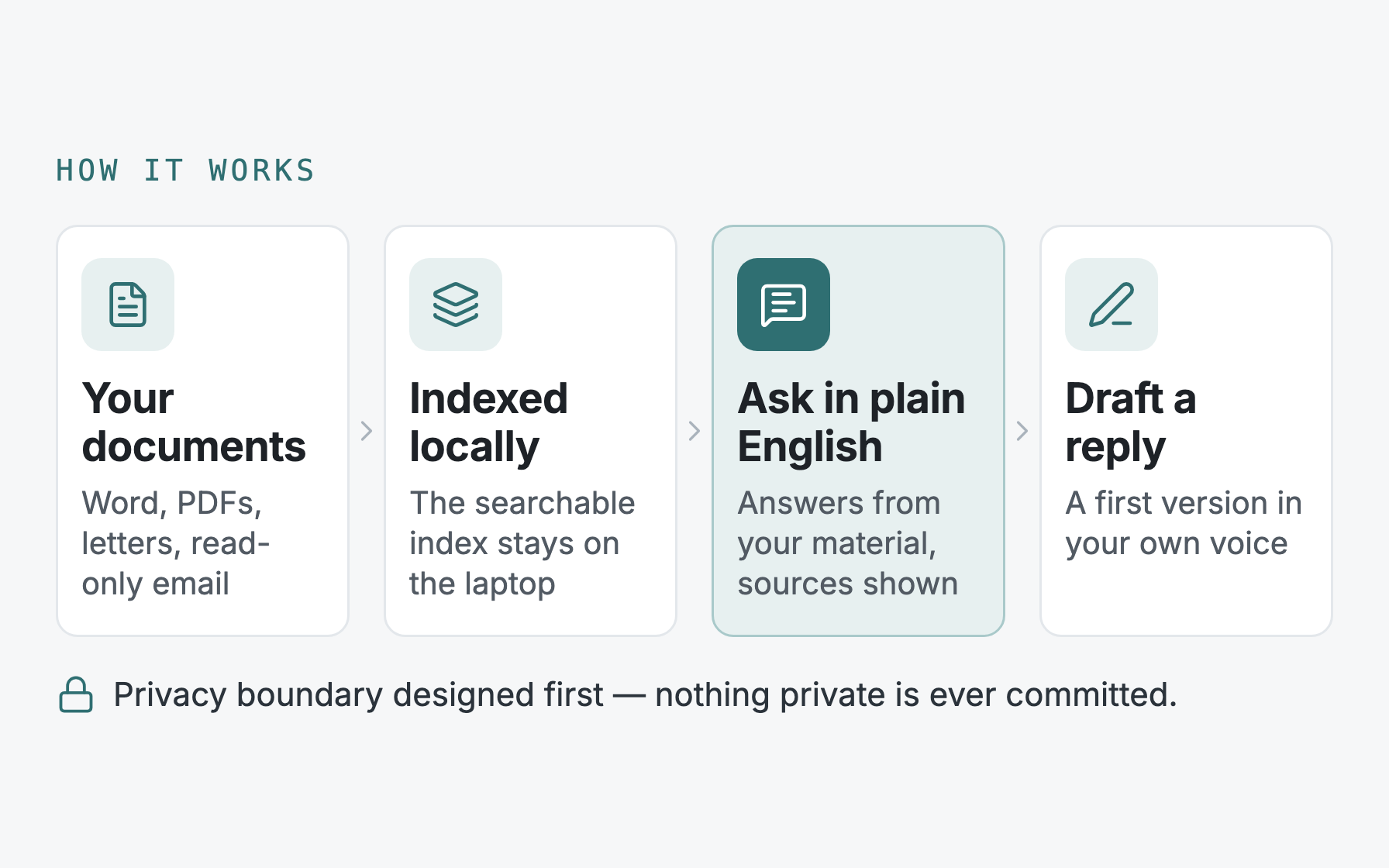
In use in my day job · local-firstTurn a pile of private documents into something you can ask questions of — with the privacy boundary designed in from the first line.
A reusable system that reads a folder of mixed documents and email, answers plain-English questions from your own material, and drafts replies in your voice. Proven across two unrelated collections without changing a line of core code.
- 4
- unrelated corpora proven
- 1
- shared codebase
- 0
- private data committed
Credentials library
In use in my day job · demo uses synthetic dataDrop credential documents in a folder — get a structured, searchable record of what the firm has actually done.
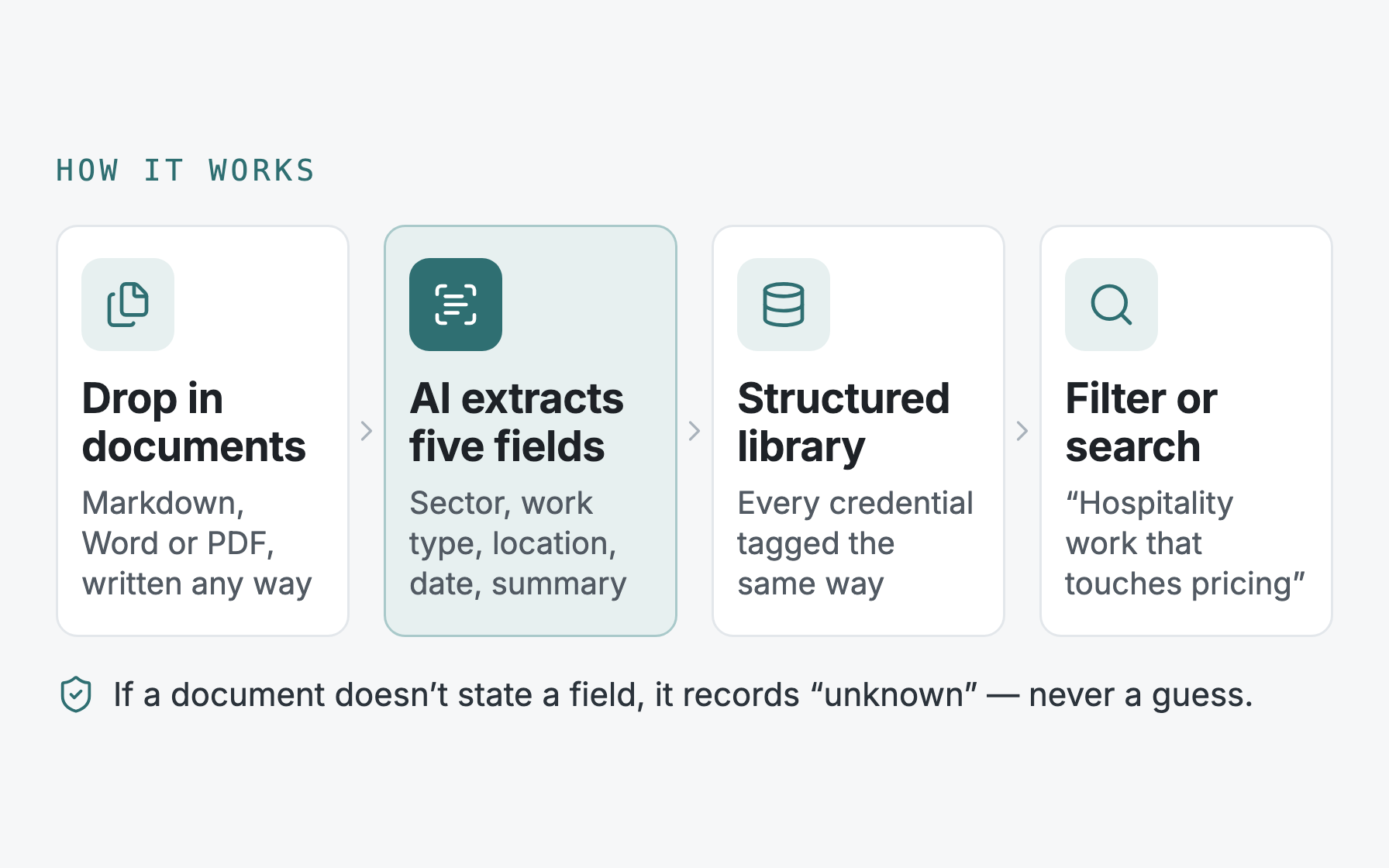
Every services firm has the same problem: the evidence of past work lives in scattered documents, so every proposal re-discovers it from scratch. This tool reads credential documents in any format, extracts a consistent taxonomy from each, and makes the whole library filterable and searchable. Shown here with an entirely fictional firm's credentials.
- 5
- fields extracted per credential
- 3
- file formats ingested (md · docx · pdf)
- 0
- real client data in the demo
Meeting prep with a verification layer
In use in my day job · demo run on public-listed-company dataCompany and context in — a one-page, sourced briefing note out, with every claim labelled by how well it is actually supported.
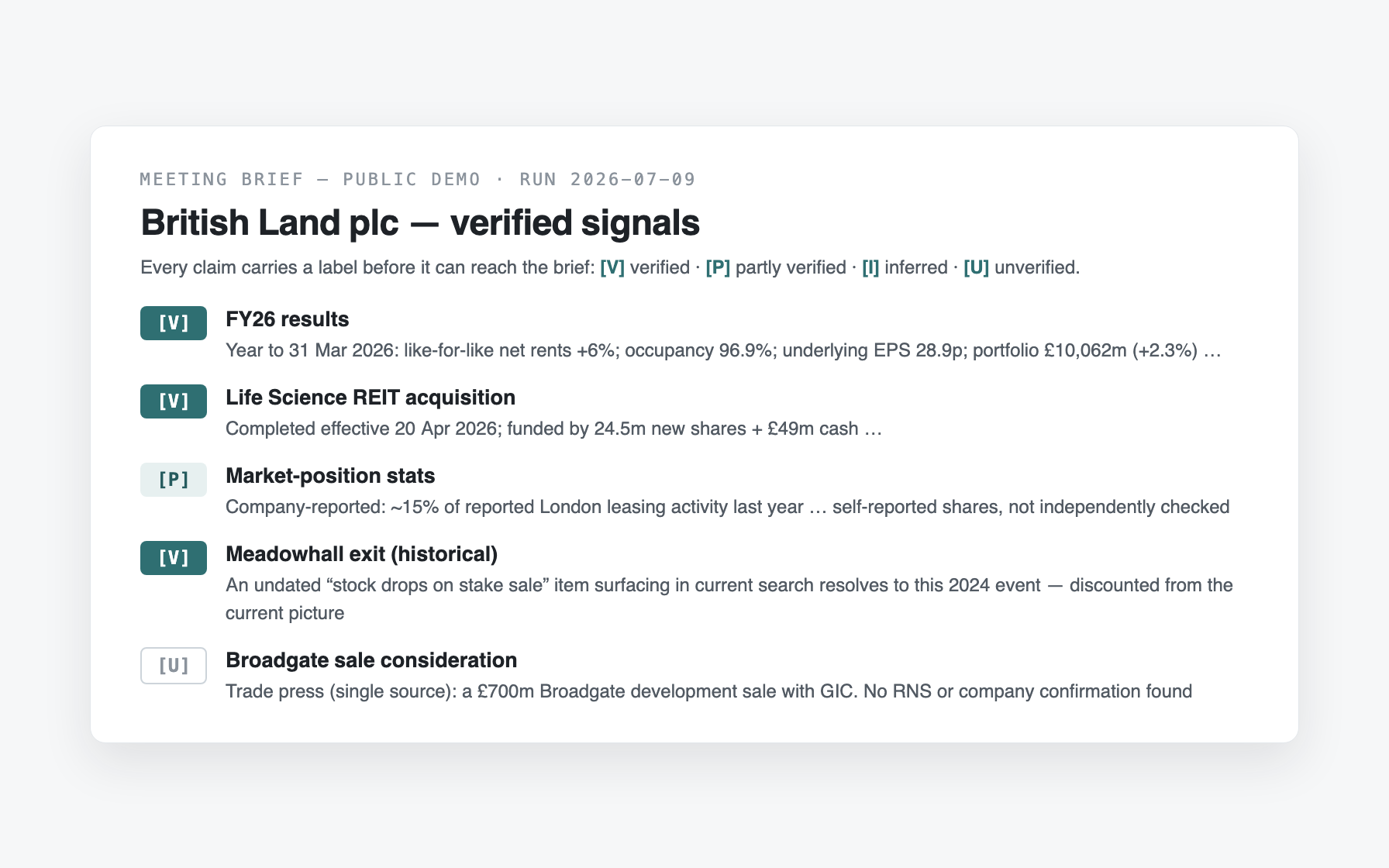
Meeting preparation is where confident summaries quietly go wrong: a stale story reads as current, a rumour reads as fact, a marketing line reads as a credential. This internal workflow researches a company from public sources and labels every claim — verified, partly verified, inferred, or unverified — before it can reach the briefing note. Demonstrated here on a FTSE-listed company, where the labels did real work.
- 4
- verification labels a claim can carry
- 2
- axes — is it true × what it means for us
- Every
- claim labelled before it can reach the brief
Tenancy analysis from a valuation export
In use in my day job · three-date comparison built, first use October 2026 · shown with fictional dataRebuild the spreadsheet so it cannot quietly go wrong, then check every figure against a second calculation.
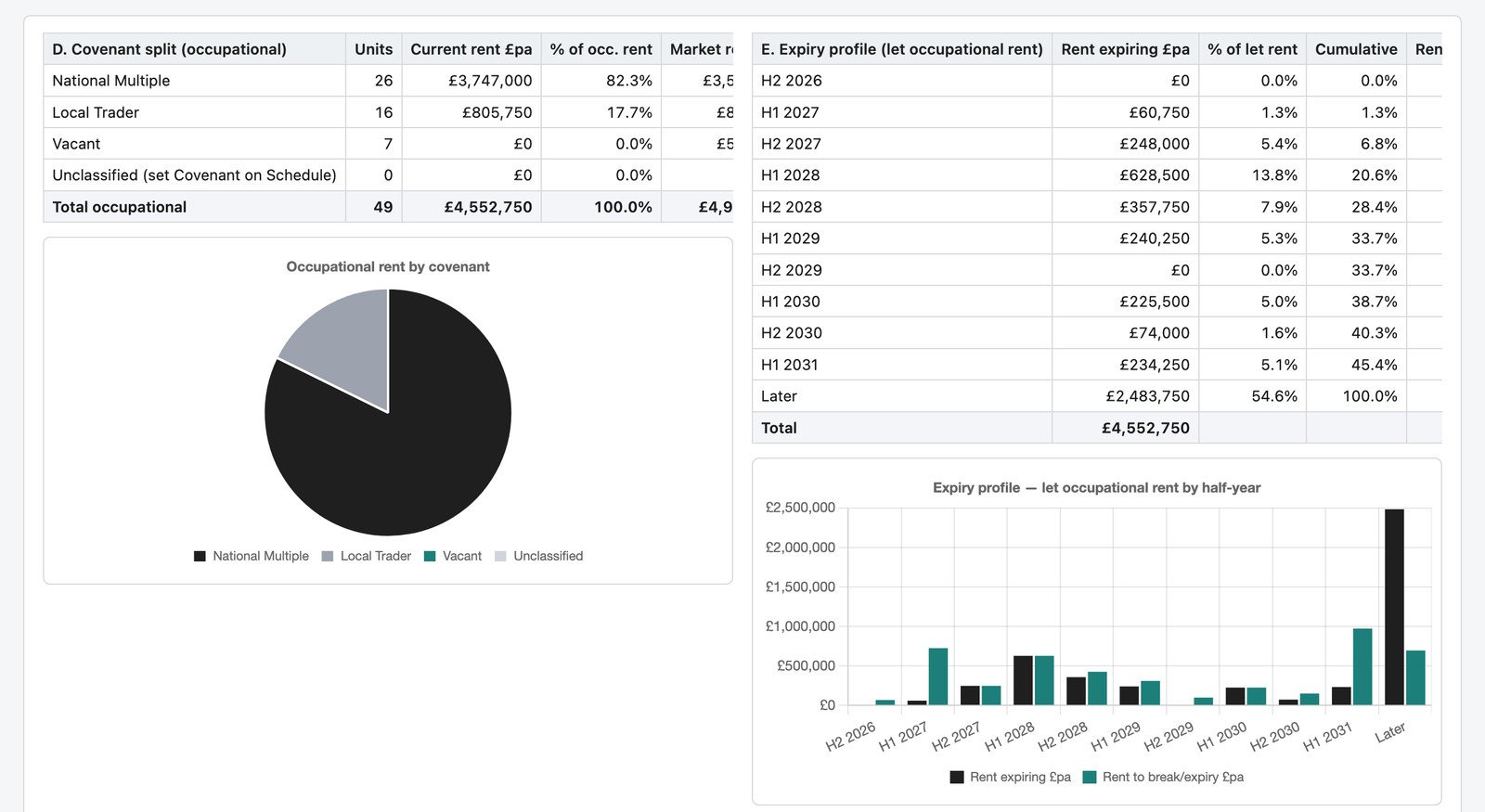
A working tool for colleagues on a valuation team: paste a tenancy schedule exported from Argus Enterprise or Circle, set the valuation date, and get the income, WAULT, covenant, expiry and income-at-risk analysis with report-ready charts. Nothing to refresh by hand, room for 1,500 tenancies, and a checks sheet that says when the input is wrong. A second tool then compares two or three valuation dates and explains what moved.
- 267
- figures re-checked against an independent calculation
- 2
- export formats read, columns matched by name
- 12
- charts sized to drop into a Word report
Country market maps for a valuation team
Used for a team meeting in Germany and a trip to Italy · shown as method only, no client or contact dataWho buys valuations in a country, who values for them now, and who to speak to. Every name is checked to be still in the job before it goes on the list.
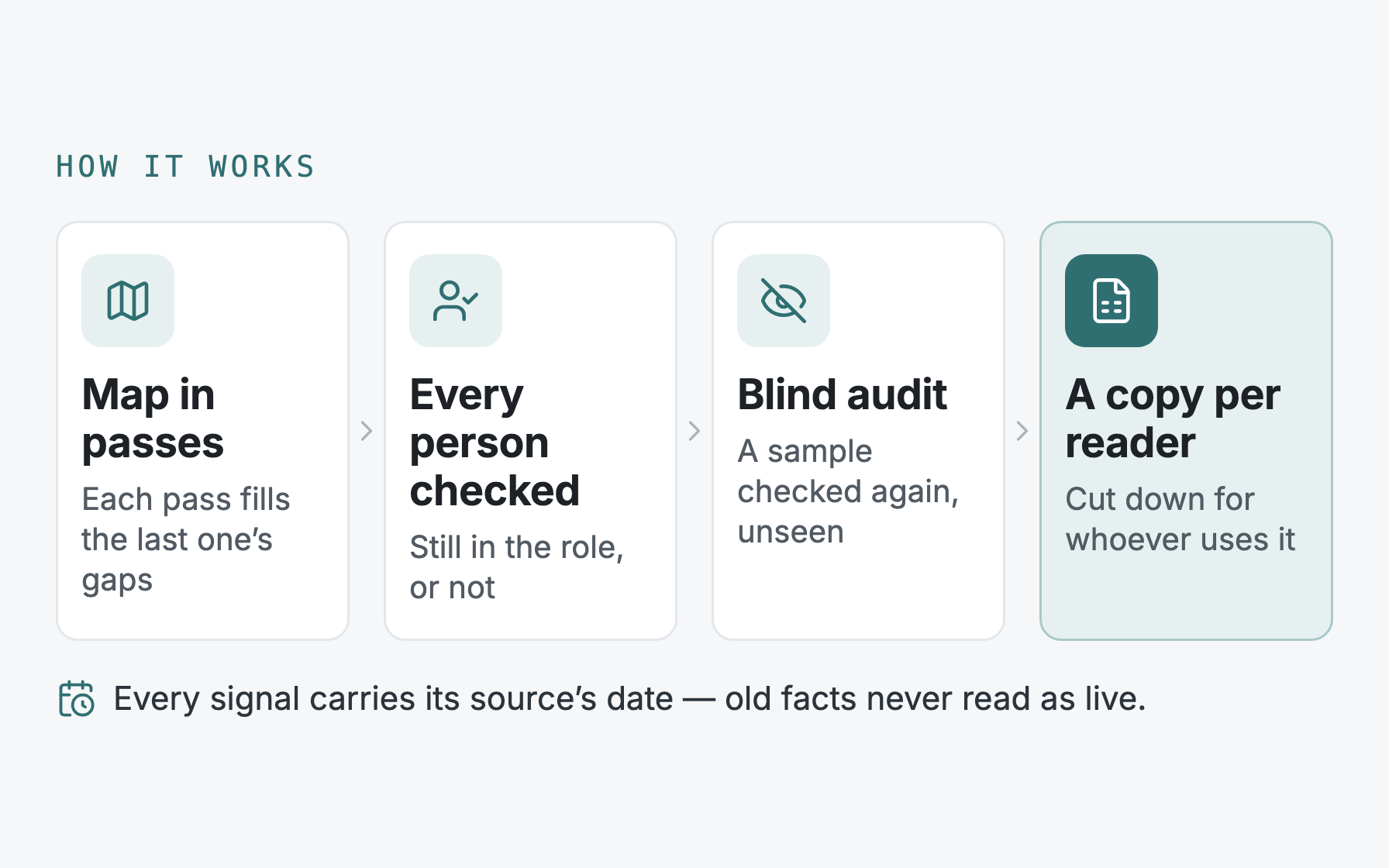
Two country market maps for my day job, Germany and then Italy, each built over a few days of sessions for a team meeting and a trip. Each is a workbook covering every organisation that buys property valuations, the firm that values for it now, the dated signals that a mandate may open, and a named contact. Each contact carries a verdict on whether they still hold the role. Research agents built it in passes, separate agents checked it, and a blind audit sampled the result.
Tools and ventures I run myself
Built for my own use or my own businesses, and used every day.
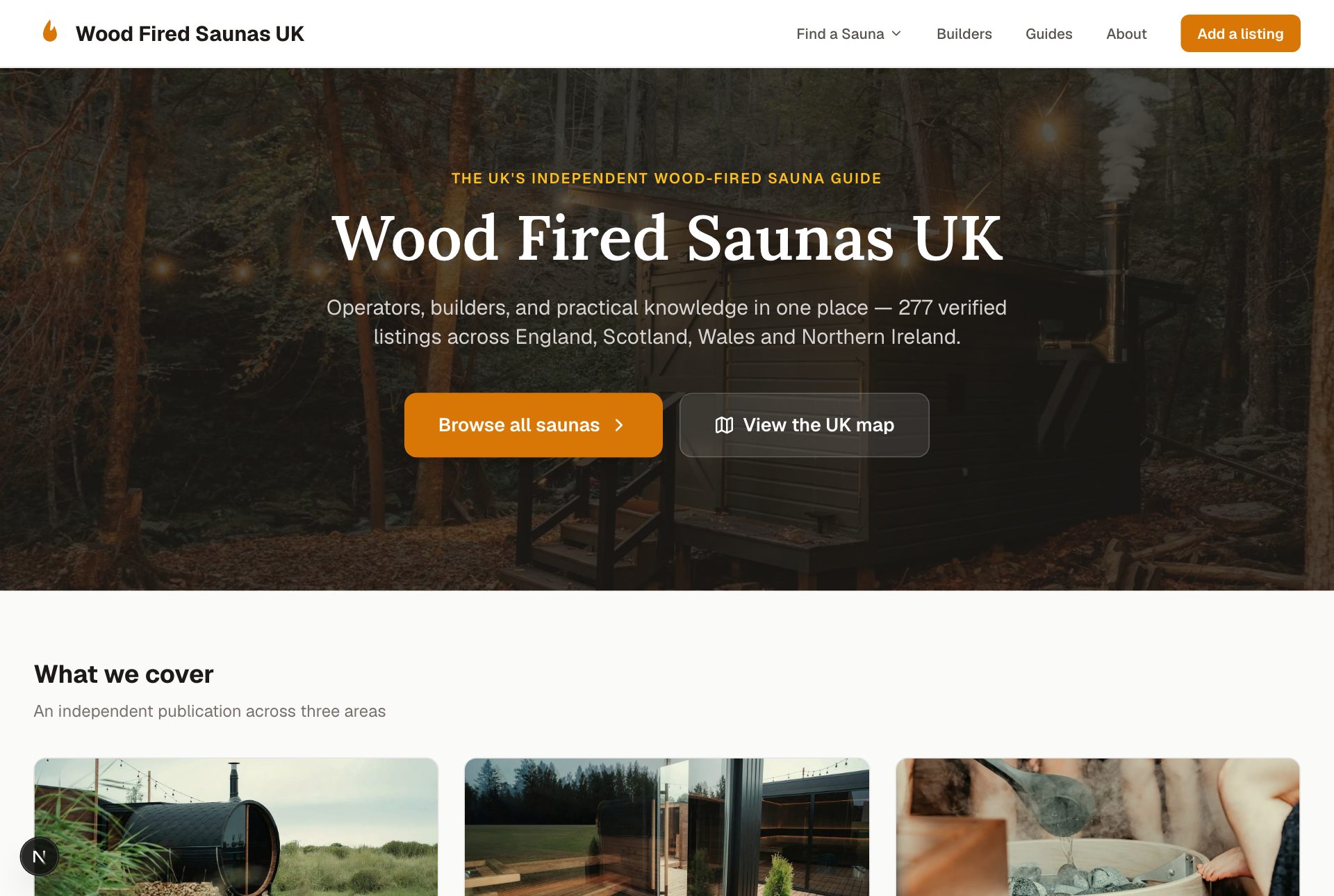
An editorial directory for a category that didn't have one.
A live directory of the UK's wood-fired and outdoor sauna scene — operators, builders, and practical guides. The interesting decisions were the ones about what to leave out.
- 285
- operator listings
- 73
- wood-fired builders
- 25
- published guides
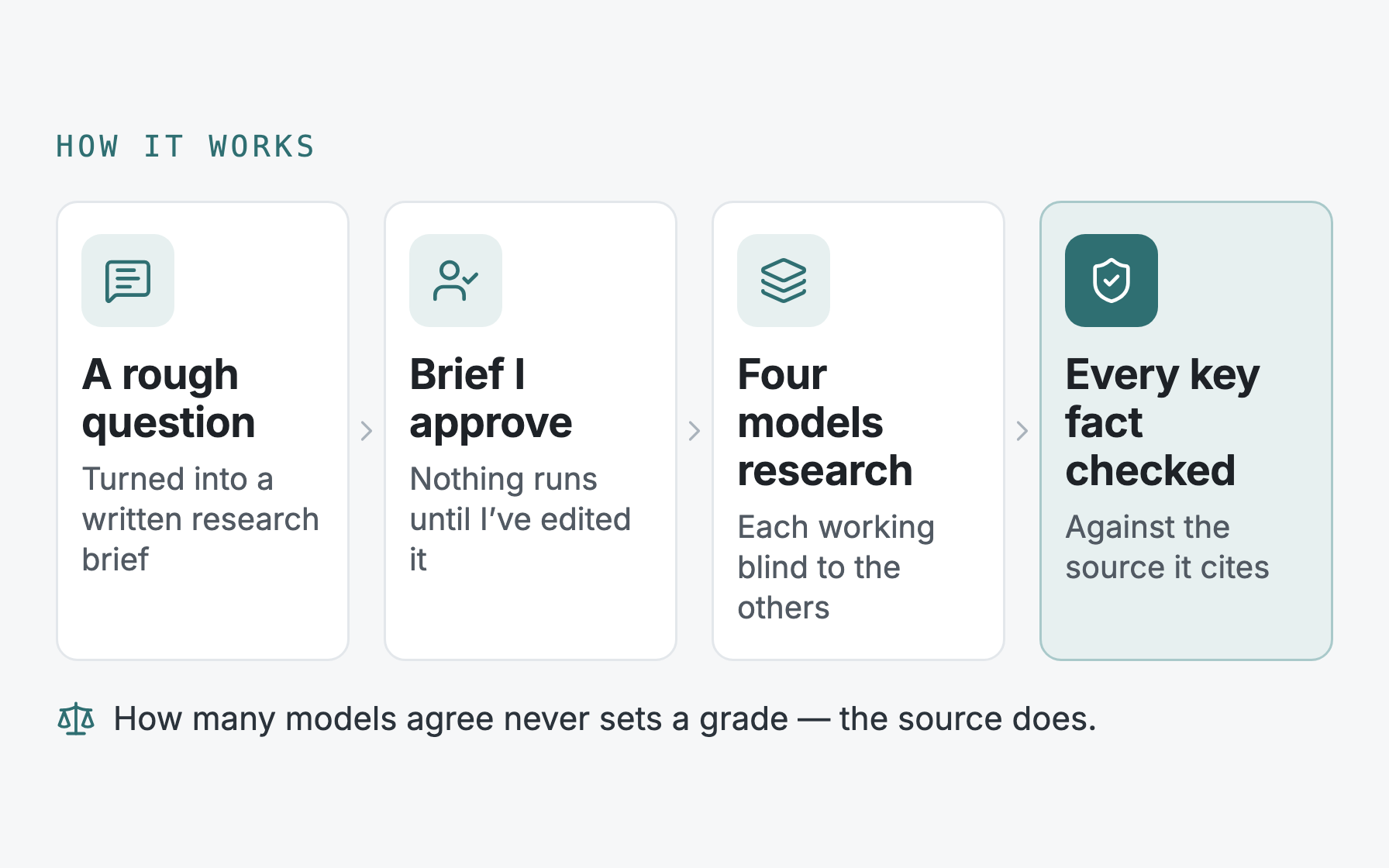
Deepreach: one research engine, many jobs
In regular useA question goes in. Four AI models research it without seeing each other's work, and every fact that matters is checked against its source before I act on it.
I built my research engine, deepreach, because copying answers between AI tools and reconciling them by hand was where errors got through. It and the checking layers under it now do the research behind decisions across my personal life, my day job and the sauna directory I run: a car lease, guides with live prices, fund and market maps, a senior hire search. The method stays the same; only the question changes.
- 63
- key facts checked on the car lease research
- 5
- of them wrong, caught before I relied on them
- 4
- AI models researching blind to each other
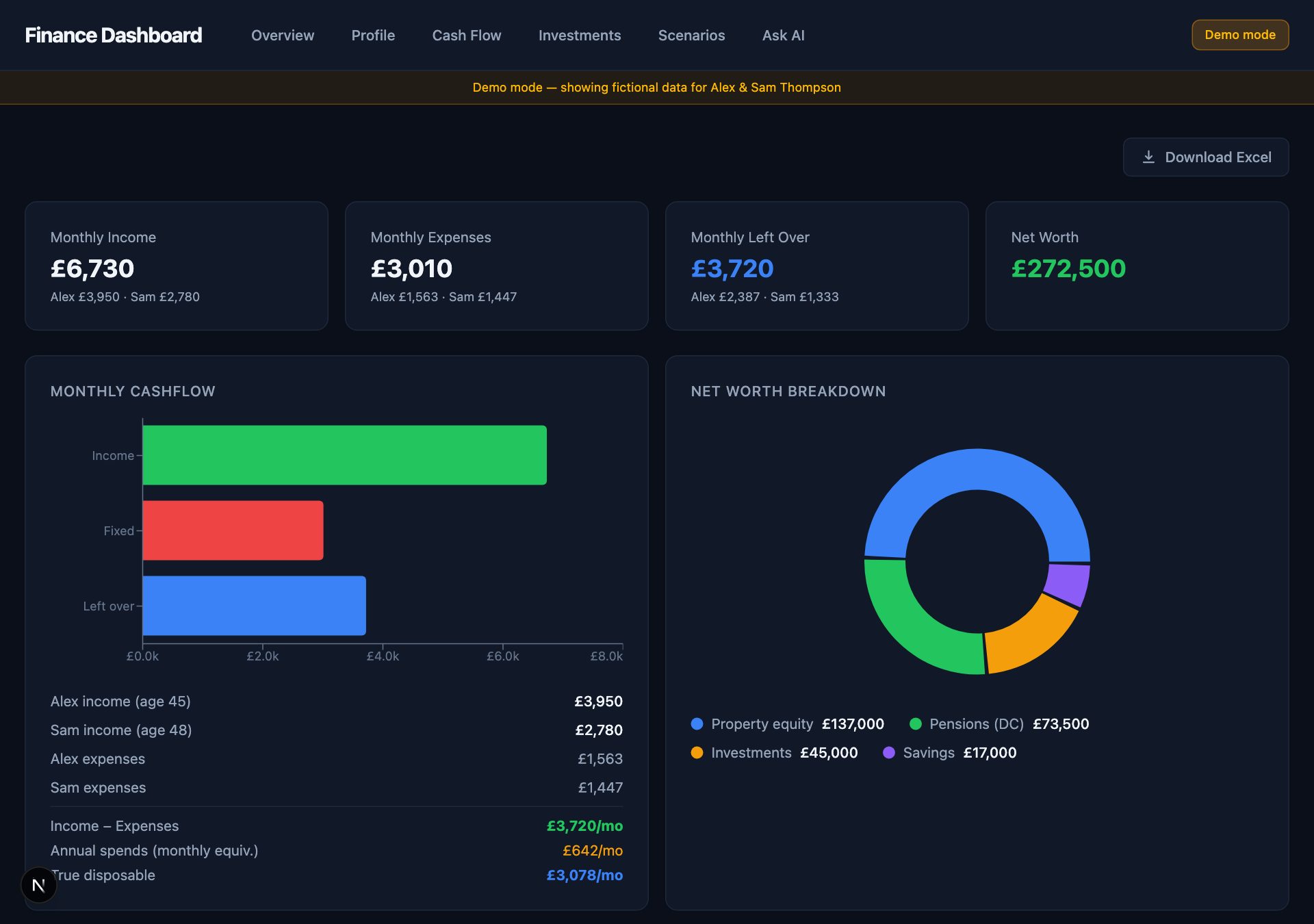
Household finance dashboard
In daily use · privateA production tool I actually depend on — and a worked example of keeping AI well away from the data that matters.
A finance dashboard I built for my own household and use daily. No database — the data layer is plain YAML files, kept local and never committed. The interesting parts are the constraints: a demo mode that can never leak real numbers, and an AI advisor that's allowed to read but never to decide.
- 13
- YAML data sources
- Daily
- in real use
- 0
- real figures shown
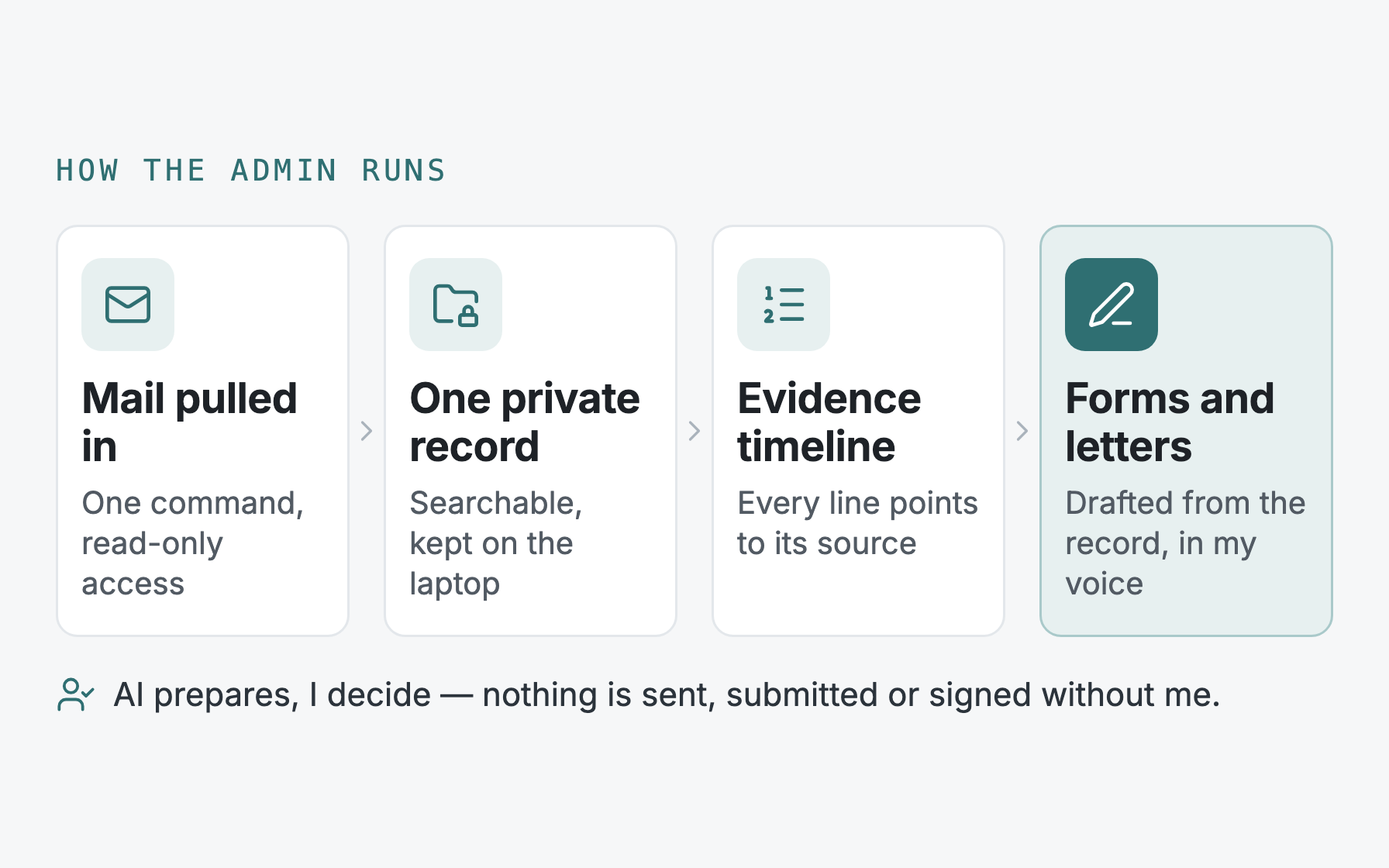
Running a long case without losing the paper trail
In use · privateA year-long, paper-heavy case across several organisations, kept straight with AI doing the admin and me making every call.
A personal case that runs across a public body, professionals and private assessors, with hundreds of documents and emails behind it. I set up a private, local record that files itself from email, keeps an evidence-based timeline, helps complete formal paperwork and drafts letters in my voice. AI does the admin; nothing goes out unless I send it.
- ~150
- documents and reports
- ~200
- email threads filed
- 0
- messages sent by AI
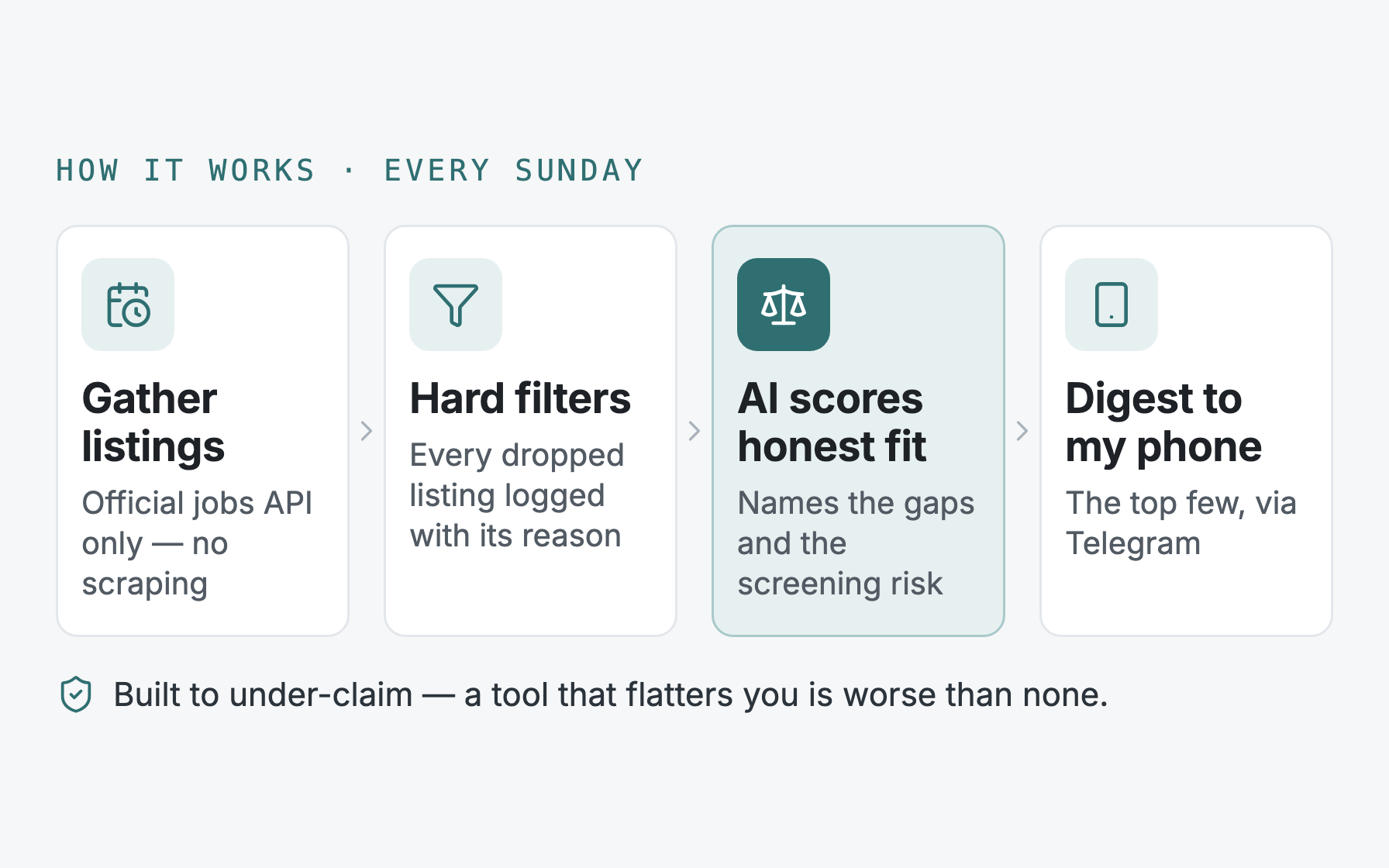
Job-scan — a weekly market radar
Running weekly · autonomousOnce a week, an automated scan reads the director-level job market and tells me honestly how well I'd fit — including when the answer is badly.
A passive radar, not a search tool: I'm not looking for a job, which is precisely when you stop seeing the market. Every Sunday it gathers listings through official APIs, filters them against hard constraints with the reason stated for every drop, has an AI score the survivors for honest fit, and sends a short digest to my phone.
- 53 → 10
- first live run: raw listings → candidates
- 24
- tests, CI-gated
- 0
- scraping — official APIs only
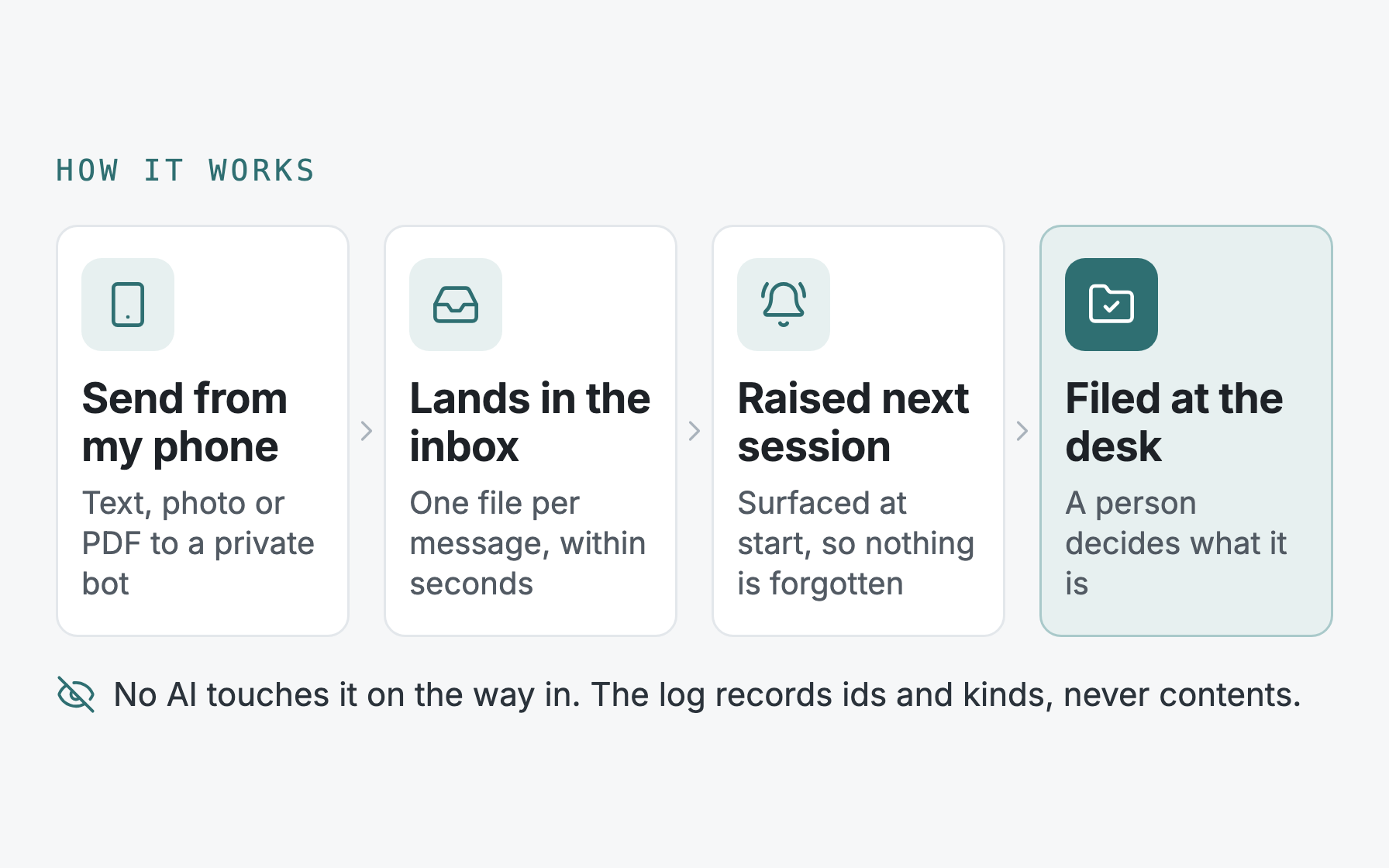
Mobile capture — phone to workspace, intact
Running always-on · in daily useA thought sent from my phone lands once, unmodified, in the workspace inbox — and the system asks me about it at the start of the next session so I never have to remember it exists.
Ideas arrive away from the desk, and friction is what kills capture. This service turns a private Telegram chat into a capture channel: text, photos and documents land as files in the workspace inbox within seconds, exactly once each, with interpretation deferred until I'm back at the desk. It has run always-on since the end of June.
- 1
- file per message — idempotent by update id
- 3
- capture kinds: text · photo · document
- 23
- tests, CI-gated
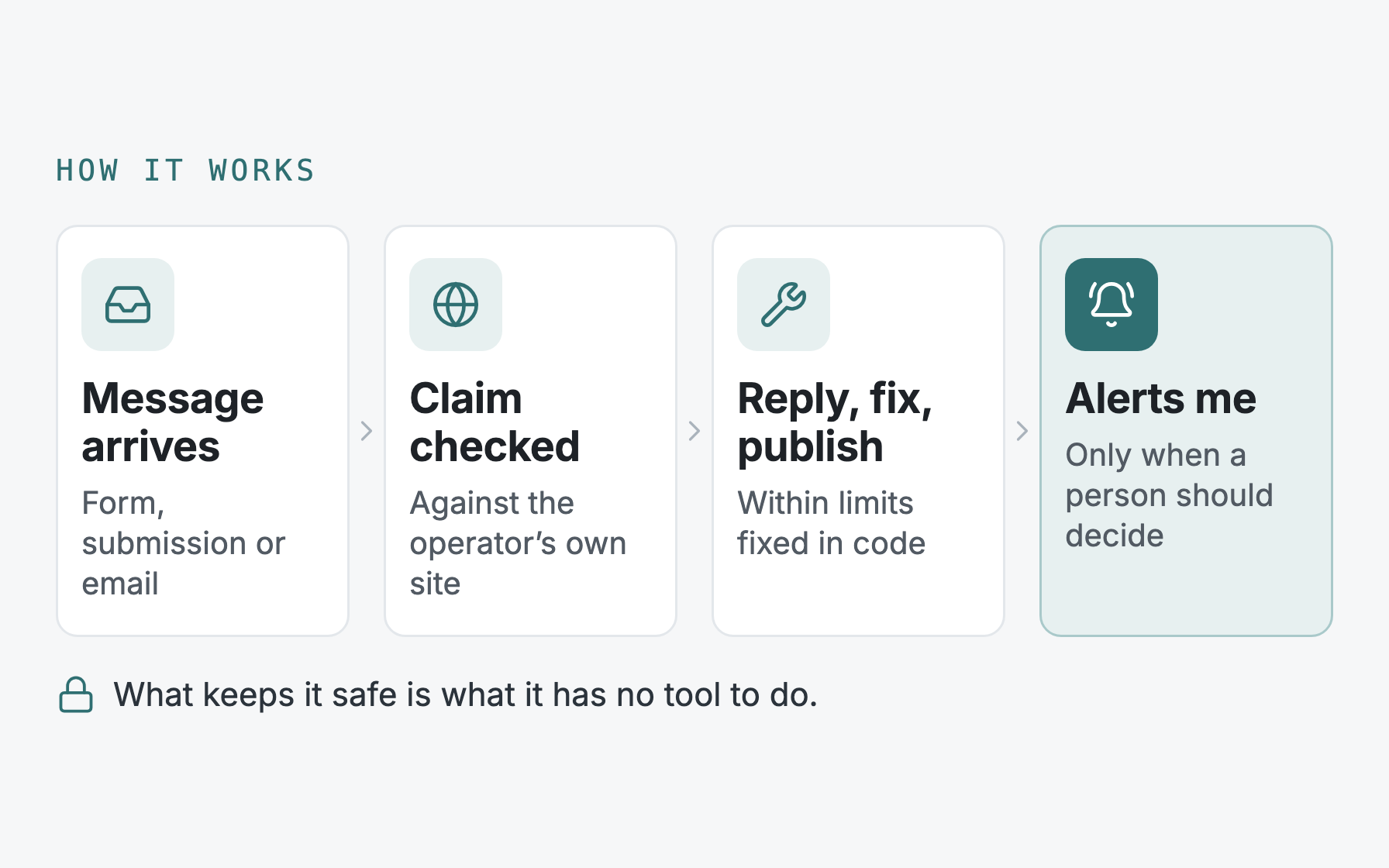
An AI that answers the sauna site's email
Live since November 2026 on woodfiredsaunas.co.ukIt reads every message and submission, replies, corrects listings and publishes new ones on its own. What keeps it safe is what it has no tool to do.
The sauna directory I run gets about one message or submission a week. A scheduled agent, the site keeper, now handles them. It answers people, checks a requested change against the operator's own website before making it, publishes new listings, and alerts me only for the short list of things a person should decide. It runs every two hours with the laptop shut, and its powers are fixed in code rather than in its instructions.
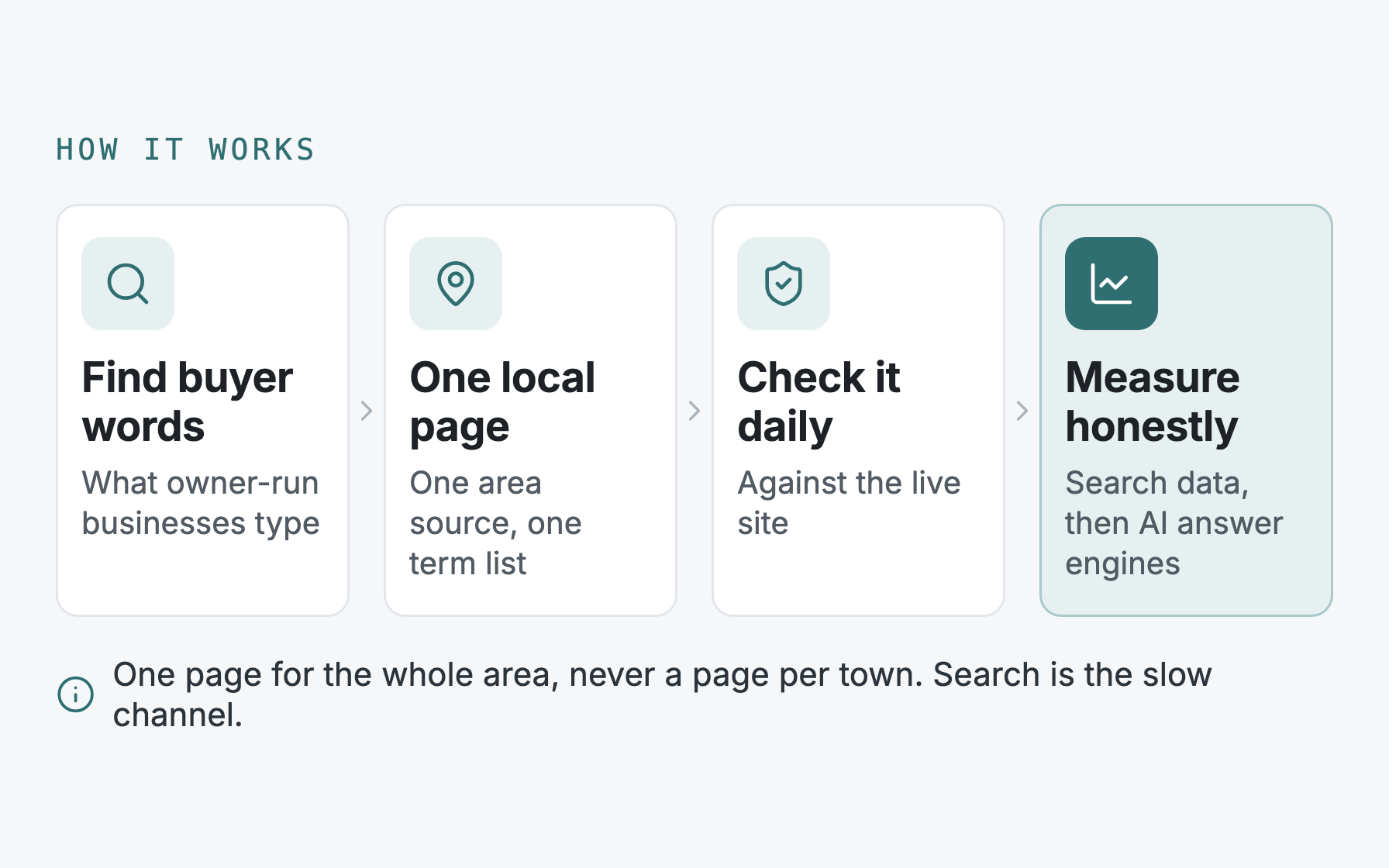
Setting this site up to be found locally
Live since October 2026 · search visibility still very lowOne local page instead of a page per town, one list of search terms each owned by a page, and an automated check on what the live site serves. The honest result so far: search barely finds it yet.
This site works well when someone is sent to it, but search engines found it for nothing a buyer types. In October I set it up to be found by owner-run businesses in Derbyshire, South Yorkshire and the East Midlands: one local page, the words people actually search, one source for where I work, one list of target terms, and a daily automated check on what the live site serves. Search visibility is still very low. That is the main finding.